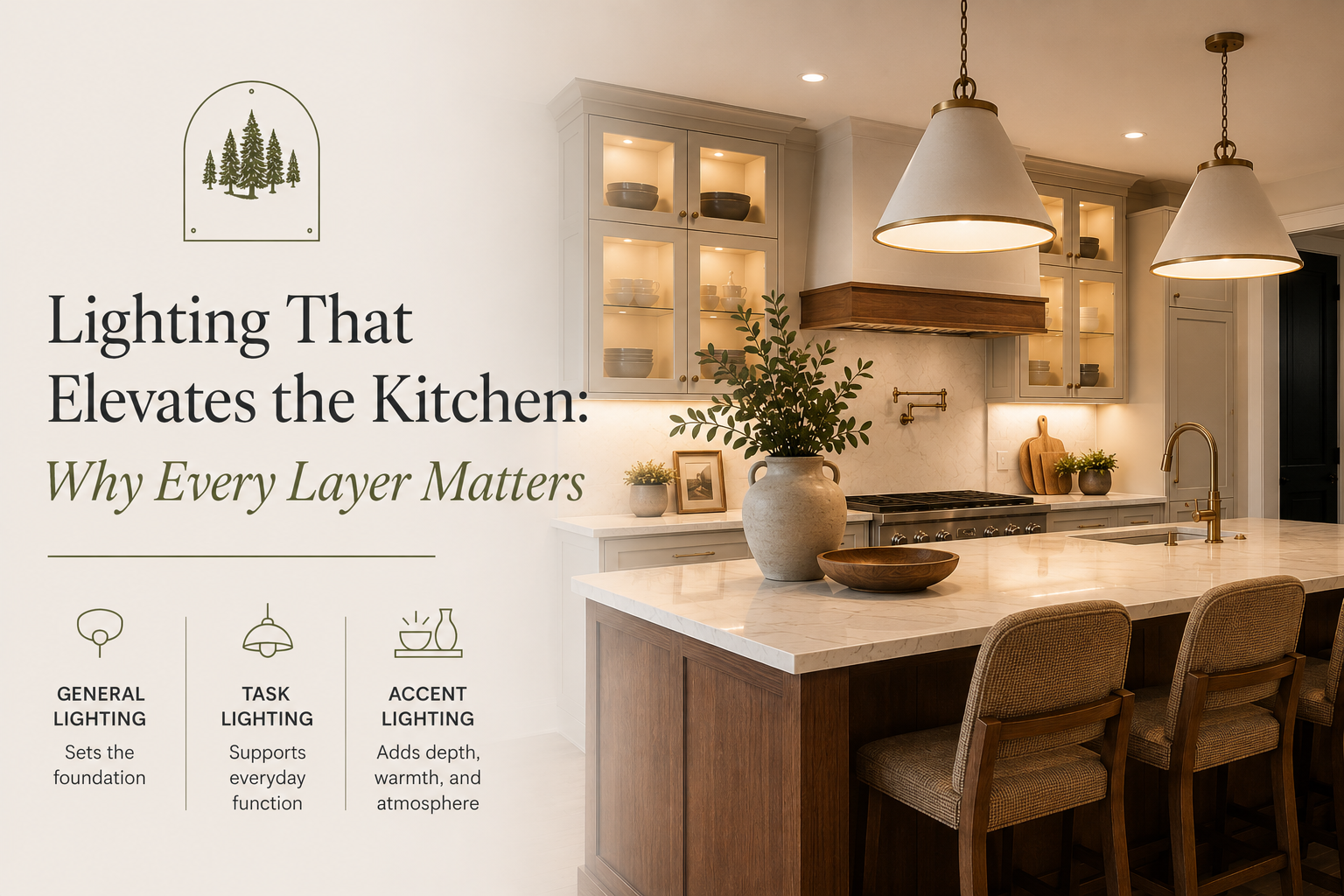
Lighting That Elevates the Kitchen
When homeowners begin planning a kitchen renovation, their attention is often drawn to cabinetry, countertops, appliances, and finishes. While these elements certainly define the character of the space, there is one design component that has the power to elevate every material selection and dramatically influence how the kitchen functions each day: lighting.
Proper lighting is not simply about making a room brighter. It is about creating a layered environment that supports cooking, entertaining, cleaning, and everyday living. A thoughtfully designed lighting plan balances beauty and functionality, ensuring the kitchen feels welcoming while performing exactly as it should.
The most successful kitchens rely on three essential layers of light: general lighting, task lighting, and accent lighting.
General Lighting: The Foundation
General lighting serves as the primary source of illumination within the kitchen. It provides consistent, overall brightness and establishes the baseline lighting level for the entire space.
Common sources of general lighting include:
Recessed ceiling fixtures Flush or semi-flush ceiling lights Decorative chandeliers Large pendant fixtures
The goal is to evenly distribute light throughout the room while minimizing harsh shadows and dark corners. Proper spacing and placement of these fixtures are critical. A kitchen can have beautiful finishes and premium appliances, but if the room feels dim or unevenly lit, the design never reaches its full potential.
General lighting should create a comfortable environment that allows the space to function effectively from early morning coffee to late evening gatherings.
Task Lighting: Where Function Meets Design
Task lighting is arguably the most important layer in a kitchen because it directly impacts how the space performs.
This lighting is specifically designed to illuminate work areas where precision is required, such as:
Food preparation zones Countertops Sinks Cooktops and ranges Beverage stations
Without adequate task lighting, homeowners often find themselves working in their own shadows, especially when overhead lighting is positioned behind them.
Under-cabinet lighting is one of the most effective task lighting solutions available. By directing light onto the countertop surface, it improves visibility while enhancing the appearance of backsplashes and countertop materials.
Well-designed task lighting reduces eye strain, improves safety, and makes everyday kitchen activities significantly more enjoyable.
Accent Lighting: Creating Atmosphere and Depth
Accent lighting is often what transforms a functional kitchen into an extraordinary one.
While general lighting illuminates the room and task lighting supports daily activities, accent lighting adds dimension, warmth, and visual interest.
Examples include:
Interior cabinet lighting Open shelf lighting Toe-kick lighting Decorative pendants Display niche lighting Integrated lighting within glass-front cabinetry
Accent lighting highlights architectural features, showcases curated accessories, and creates visual depth that cannot be achieved through overhead lighting alone.
In the evening, accent lighting often becomes the preferred source of illumination. Rather than flooding the room with bright overhead light, homeowners can enjoy a softer, more inviting atmosphere that feels relaxed and comfortable.
Why Layered Lighting Matters
One of the most common mistakes in kitchen design is relying on a single type of lighting to perform every function.
A row of recessed lights may adequately illuminate the room, but it will not provide the focused illumination needed for food preparation. Likewise, beautiful decorative pendants may create ambiance, but they cannot serve as the sole source of light for the entire kitchen.
Layered lighting allows each fixture to perform a specific role. Together, these layers create a balanced environment that adapts throughout the day and supports a variety of activities.
The result is a kitchen that feels brighter, functions better, and showcases every design detail more effectively.
The Takeaway
A successful kitchen is more than beautiful cabinetry and premium finishes. It is a space designed to support how people live, gather, cook, and connect.
Thoughtful lighting design ensures every corner of the kitchen works as intended while enhancing the beauty of the materials selected throughout the space. By combining general lighting, task lighting, and accent lighting, homeowners create a kitchen that not only looks exceptional but performs exceptionally well for years to come.
Because in great kitchen design, lighting is not an afterthought—it is one of the most important design decisions you can make.